TypeScript 支持
Qingkuai 提供了完整的 TypeScript 支持,框架本身就使用 TypeScript 编写,并在设计层面充分考虑了类型系统的兼容性。无论是组件属性、指令、生命周期函数还是全局 API,Qingkuai 都提供了完善的类型提示与推导能力,帮助开发者在编写代码时获得更好的自动补全、错误检测与开发体验。对于追求类型安全和可维护性的项目,TypeScript 与 Qingkuai 是一对理想搭档。
组件属性
在组件文件中,Refs 和 Props 这两个类型名称是保留的,声明这两个类型即可为组件的引用属性和其他属性标记类型:
interface Refs {
    // ...
}

interface Props {
    // ...
}
使用 type 关键字声明类型别名也是可以的:
type Refs = {
    // ...
}
type Props = Record<string, any>
也支持从外部文件导入类型:
import type Refs from "./ref-types/Component"
import type { ComponentProps as Props } from "./types"在语言服务层面,Props 类型会被添加一层 Readonly 包装,因为组件 props 不支持直接修改:
interface Props {
    name: string
    list: string[]
}

// Cannot assign to 'name' because it is a read-only property.ts(2540)
props.name = "..."
如果你的嵌入脚本语言为 JavaScript,可以通过 JSDoc 为组件属性添加类型声明:
/**
 * @typedef {{ name: string }} Refs
 */
或者:
/**
 * @typedef {Object} Props
 * @property {string} name
 */
泛型参数
Qingkuai 组件支持泛型类型参数,直接将你需要定义的泛型参数添加到 Props 或 Refs 类型声明中即可:
type Refs<T> = {
    value: T
}

interface Props<T> {
    list: T[]
}
如果嵌入脚本语言为 JavaScript,也支持通过 JSDoc 声明泛型类型:
/**
 * @template T
 * @typedef {Object} Props
 * @property {T[]} list
 */
Qingkuai 语言服务会根据组件属性推导泛型参数类型。例如在下面的示例中,Outer.qk 中 Inner 组件的 list 属性被推导为 string[],因此 T 会被推导为 string:
<!-- Inner.qk -->
<lang-ts>
    interface Props<T> {
        list: T[]
    }
</lang-ts>

<!-- Outer.qk -->
<Inner !list={["a", "b", "c"]} />
当然,你也可以手动指定泛型实参以约束属性类型:
<!-- list 属性必须是数字数组 -->
<Inner<number> !list={[1, 2, 3]} />

<!-- list 属性必须是字符串数组 -->
<Inner<string> !list={["a", "b", "c"]} />
当某个外部属性包含泛型参数时,你不能直接导入它们作为全局类型声明,因为这些导入的类型在使用时必须为其传递泛型实参,这和普通 TypeScript 文件的限制是一致的。此时你需要在组件文件中重新声明全局类型,并为这个导入的类型传递泛型实参,例如:
import type { ComponentProps } from "./types"

type Props = ComponentProps<string>

// 或者
interface Props extends ComponentProps<string> {
    // ...
}
默认值推断
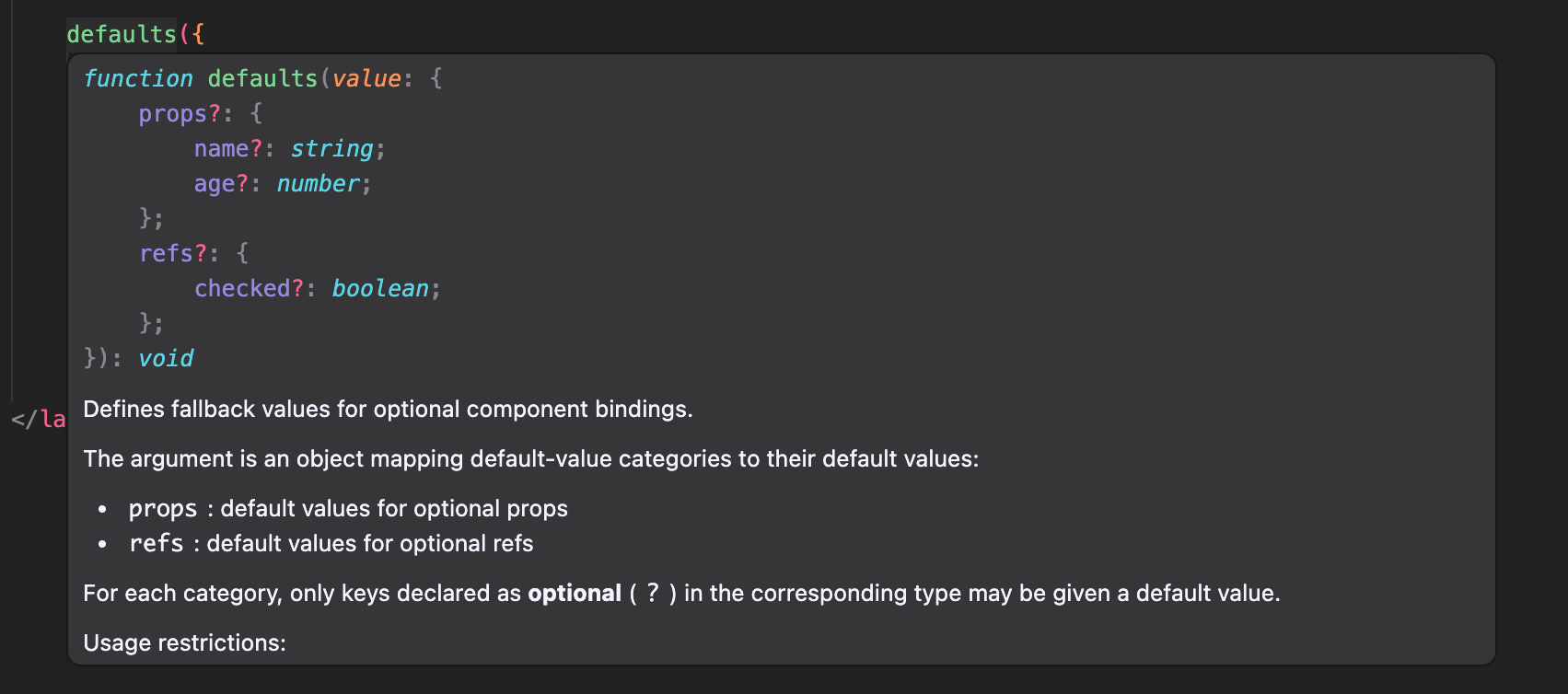
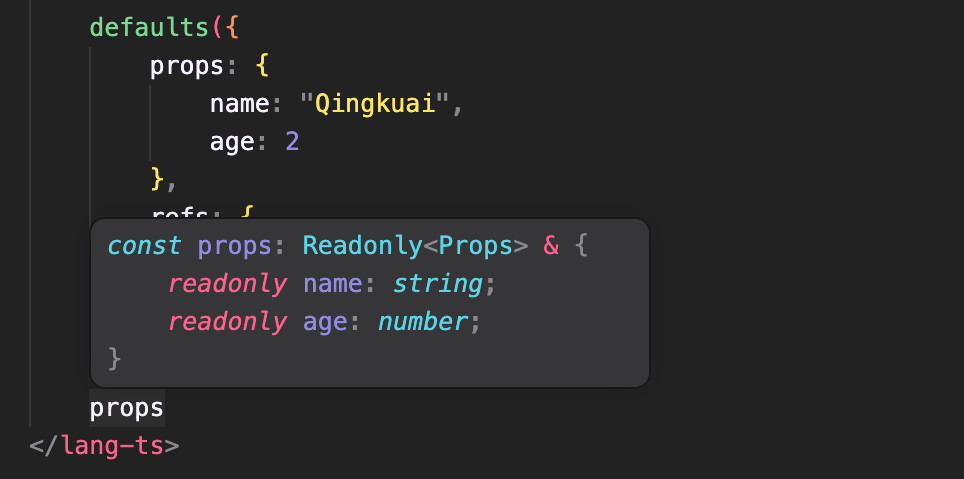
在组件文件中,使用内建的 defaults 方法可以为组件的可选属性指定默认值,同时收窄 props 与 refs 的类型。
interface Props {
    name?: string
    age?: number
    fixed: string
}

interface Refs {
    checked?: boolean
}
defaults 的参数类型为 Props 与 Refs 类型中声明为可选的属性:
调用 defaults 后,props 与 refs 中被设置了默认值的属性,其类型会在后续代码中被收窄为非可选(必填)类型,这与运行时表现一致:
插槽上下文
在组件文件中你无需关心插槽类型声明,Qingkuai 语言服务会根据 slot 标签自动推导插槽上下文的类型:
<!-- DataList.qk -->
<lang-ts>
    const rows = [
        {
            id: 1,
            name: "Row 1"
        },
        {
            id: 2,
            name: "Row 2"
        }
    ]
</lang-ts>

<qk:spread #for={row of rows}>
    <slot !row>
        <!-- default content -->
    </slot>
</qk:spread>导入上面的组件使用时,row 的类型会被正确推导为 { id: number, name: string }:
<DataList>
    <p #slot={row from "default"}>
        {row.id}: {row.name}
    </p>
</DataList>
事件类型推断机制
在 Qingkuai 组件中,事件与其他非引用类型属性一样,都通过内建的 props 对象访问。也就是说,在组件标签上,属性名前的 @ 和 ! 前缀可以互换,@ 主要用于语义标识,表示该属性是可调用的方法。当你为组件添加属性时,输入 @ 会触发属性名自动补全,这些被提示的名称正是被推断为事件的属性。只要组件 Props 类型中的某个属性值是函数类型,Qingkuai 语言服务就会将其标记为事件候选项,并在你输入 @ 时提供相应的属性名补全提示。下面代码中,Props 的两个属性都会被推断为事件:
interface Props {
    event1: () => void
    event2?: (s: string) => boolean
}